logo
Casa Produtosnão - equipamento de teste destrutivo

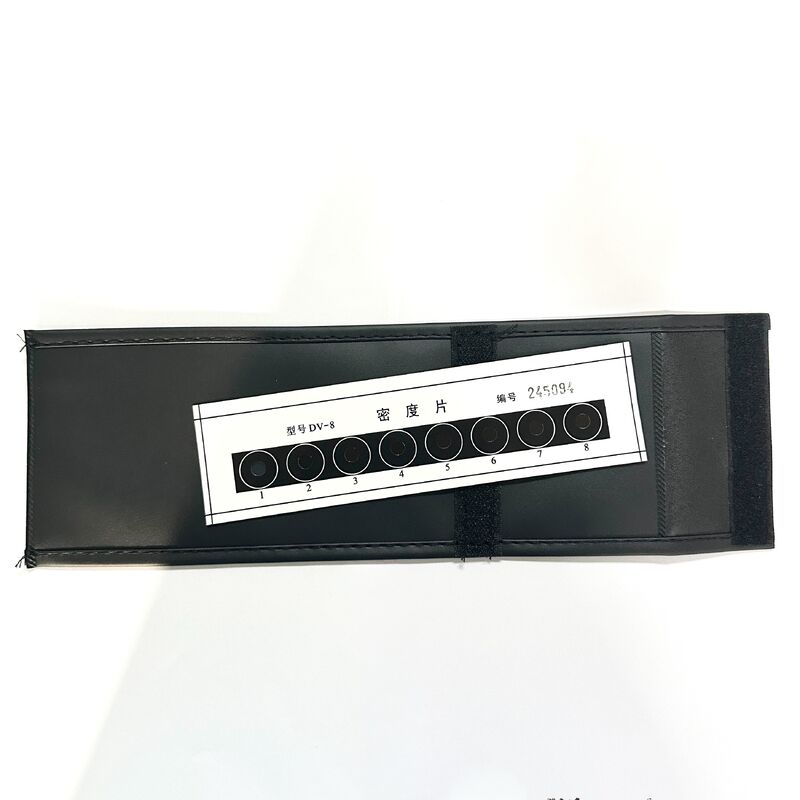
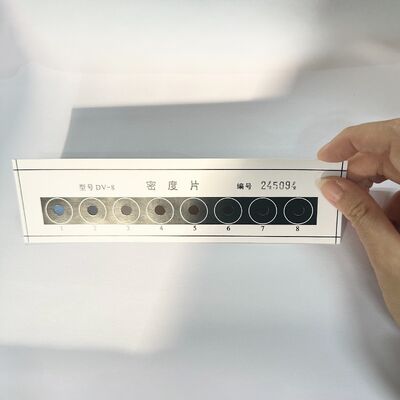
Viewing Light Density Film with Calibration certificate

Os melhores produtos
Certificado
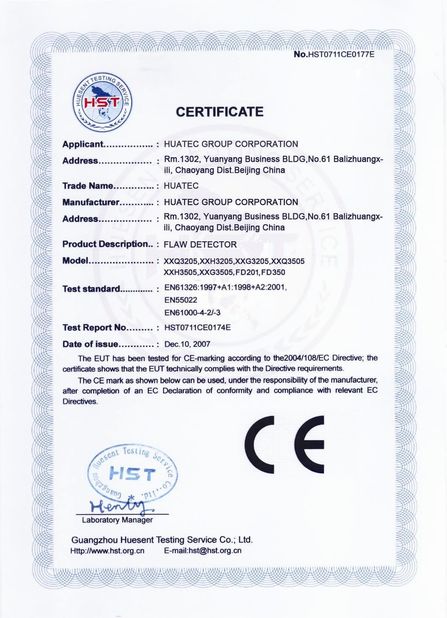
CHINA HUATEC  GROUP  CORPORATION Certificações
Revisões do cliente
produtos de gama ampla de NDT, nós podemos obter todos no grupo huatec. Nós preferimos comprar a partir deles. Rudolf Shteinman Rússia

—— Rudolf Shteinman

Eu gosto do serviço, resposta muito rápida, trabalho profissional. Aret Turquia

—— Aret Kaya

Testador de dureza huatec, muito boa qualidade, estamos muito satisfeitos com o testador de dureza portátil RHL-50. Kumaren Govender Sotuth África

—— Kumaren Govender

Estou Chat Online Agora

Viewing Light Density Film with Calibration certificate

Viewing Light Density Film with Calibration certificate
Viewing Light Density Film with Calibration certificate Viewing Light Density Film with Calibration certificate

Imagem Grande :  Viewing Light Density Film with Calibration certificate

Detalhes do produto:
Lugar de origem: China
Marca: HUATEC
Certificação: CE
Condições de Pagamento e Envio:
Quantidade de ordem mínima: 1 unidade
Detalhes da embalagem: Caixa de embalagem de papelão
Tempo de entrega: 3-5 dias úteis após o recebimento do seu pagamento
Termos de pagamento: T/T, Paypal
Habilidade da fonte: 5 conjuntos/mês

Viewing Light Density Film with Calibration certificate

descrição
Coeficiente de uniformidade: > 0,9 Coeficiente de dispersão: σ' > 0,7
Destacar:

Viewing Light Density Film with calibration

,

Non Destructive Testing Film

,

Calibrated Density Film for testing

Viewing Light Density Film with Calibration certificate


The core parameters of the film density viewer need to be focused on, including brightness, contrast range, and uniformity. The current mainstream LED film viewer technical parameters are as follows:
1. Key performance indicators
1.1 Relationship between brightness and contrast

For blackness ≤ 4.0D Brightness should be ≥ 100,000 cd/m²
For blackness ≤ 4.5D Brightness should be ≥ 300,000 cd/m²
For blackness ≤ 5.0D Brightness should be ≥ 800,000 cd/m²


Note: 1 cd/m² ≈ 3.14 LUX, for example, 300,000 cd/m² ≈ 940,000 LUX
1.2 Uniformity and scattering coefficient
· Uniformity coefficient should be > 0.9
· Scattering coefficient σ' > 0.7 (mandatory requirement of European standard ISO 5580)
1.3 Window size and power consumption
· Standard window: 220 × 65 mm
· Large window: 350 × 95 mm
· Power consumption range: 50W (portable model) to 230W (high-brightness model)
2. Frontier technology characteristics
· Dual window design: independent high-brightness areas, main window 100,000 cd/m² for processing regular films, strong light window 300,000 cd/m² for resolving high-contrast areas
· Intelligent dimming: PWM stepless dimming (2%-100%), zone lighting (supports 6-level adjustment)
· Temperature control and heat dissipation: external cooling system (such as flat-panel LED film viewer) to achieve surface temperature rise ≤ 18℃
· Wireless foot pedal switch: liberate hands for operation
3. Compliance with international standards based on ISO 5580:2023 and NB/T47013-2015:
· Film with blackness of 4.5D requires film viewer brightness ≥ 300,000 cd/m²
· Film with blackness of 5.0D requires brightness ≥ 1,000,000 cd/m²
· The new national standard in 2025 has adopted ISO 5580 equivalently, requiring color temperature 2500K - 7000K. It is recommended to prioritize choosing a model with brightness of 300,000 cd/m² or above and uniformity > 0.9 to ensure the accuracy of film evaluation for high-blackness films. The equipment needs to be calibrated for brightness and uniformity annually and retain the calibration certificate to meet the standard compliance requirements.

Viewing Light Density Film with Calibration certificate 0

Viewing Light Density Film with Calibration certificate 1

Viewing Light Density Film with Calibration certificate 2

Contacto
HUATEC GROUP CORPORATION

Pessoa de Contato: Ms. Shifen Yuan

Telefone: 8610 82921131,8618610328618

Fax: 86-10-82916893

Envie sua pergunta diretamente para nós (0 / 3000)